

Tabletop to Screen: Adapting RPGs into Digital Worlds
There is a particular magic to gathering around a table with friends, dice clattering across a worn character sheet, a story unfolding in real time through shared imagination. For decades, that experience has defined tabletop roleplaying games, from the earliest dungeon crawls to the deeply personal horror of Vampire: The Masquerade. But what happens when we try to translate that experience into a persistent online world? What is gained, what is lost, and why has the journey from tabletop to screen proven so treacherous for some of gaming’s most beloved franchises? Here at World of Darkness News, we’ve watched these adaptations closely, and the results tell a fascinating story about the tension between mechanical systems and human storytelling.
Why Tabletop RPGs Are So Hard to Adapt
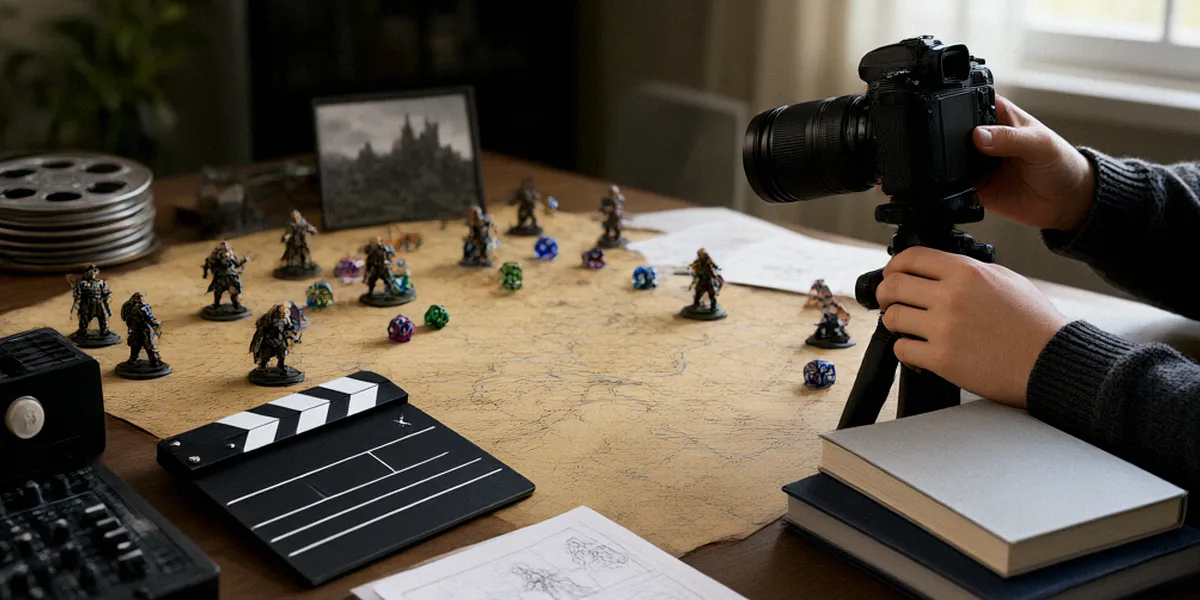
On the surface, adapting a tabletop RPG into a video game sounds straightforward. You have rules, character sheets, dice mechanics, and a rich lore bible. Surely a skilled development team could simply digitise all of that and call it a day? In practice, the challenge runs far deeper. Tabletop RPGs are not merely rulebooks. They are social contracts between players, mediated by a human being who improvises, adjusts, and responds to the mood of the room. That human element is extraordinarily difficult to replicate in code.
Vampire: The Masquerade illustrates this problem perfectly. Its Storyteller system was designed to prioritise personal horror, moral ambiguity, and character-driven drama over tactical combat. The rules exist to support a narrative, not to define it. When you strip away the Storyteller and replace them with a scripted engine, you risk losing the very thing that makes the game resonate: the feeling that your choices carry genuine weight in a world that reacts to who you are, not just what you do.
The Game Master Problem
A tabletop Game Master or Storyteller does far more than adjudicate rules. They read the table, sense when a scene needs tension or levity, and pivot when players go off-script. They create NPCs on the fly, reward creative thinking, and punish recklessness with consequences that feel earned rather than arbitrary. Digital systems, by contrast, operate within predefined parameters. Even the most sophisticated AI cannot fully replicate the improvisational intuition of a skilled human narrator.
This is why so many RPG adaptations lean towards combat-heavy designs. Combat is easy to systematise. Conversation, moral dilemma, and the slow burn of political intrigue within vampire society are not. The result is often a game that looks like Vampire: The Masquerade but feels like a generic action title wearing its skin.
Rules vs. Narrative Freedom
Another fundamental tension lies in the balance between rules and narrative freedom. Tabletop players routinely bend, ignore, or reinterpret rules in service of a better story. A Storyteller might allow a daring plan that technically violates the letter of the system because it serves the drama. Video games cannot offer that flexibility without enormous complexity. Every possible player action must be anticipated, coded, and tested.
This is not to say that digital adaptations are doomed. Far from it. But understanding these limitations helps explain why some adaptations soar while others stumble. The best ones find clever ways to simulate narrative freedom within structured systems, offering meaningful choices that feel organic rather than illusory.
Lessons from Early World of Darkness Games
The World of Darkness has a long and complicated history with digital adaptation. Two early games in particular, both developed before the franchise’s later licensing upheavals, offer valuable lessons about what works and what does not when translating gothic horror into interactive form.
Vampire: The Masquerade – Redemption
Released in 2000, Vampire: The Masquerade – Redemption was an ambitious attempt to bring the World of Darkness to life as an action RPG. It followed a Crusader knight named Christof who is embraced into vampiric unlife and must navigate centuries of intrigue. The game captured some of the setting’s gothic atmosphere and introduced players to clans, disciplines, and the Camarilla’s byzantine politics.
However, Redemption struggled with clunky combat, uneven pacing, and a storyline that often felt linear despite its source material’s emphasis on player agency. It was a respectable effort, but it demonstrated that atmosphere alone could not carry an adaptation. Players wanted to feel like active participants in the World of Darkness, not passengers on a predetermined ride.
Bloodlines and the Power of Fan Patches
Then came Vampire: The Masquerade – Bloodlines. Developed by Troika Games and released in 2004, Bloodlines is now widely regarded as one of the greatest RPGs ever made. It offered a richly realised Los Angeles, memorable characters, and a level of player choice that felt genuinely consequential. The writing crackled with wit and menace, and the game’s handling of clans, disciplines, and moral ambiguity set a new standard for adaptation.
Yet Bloodlines launched in a notoriously buggy state. Its commercial performance was disappointing, and Troika Games closed shortly after release. What saved Bloodlines was its community. Fan patches, most notably the unofficial patch maintained for years by dedicated modders, fixed countless bugs, restored cut content, and polished the experience into something approaching its original vision. Without that community effort, Bloodlines might have faded into obscurity rather than becoming a cult classic that still shapes expectations for World of Darkness games today.
- Atmosphere and writing matter more than graphical fidelity.
- Player choice must feel meaningful, not cosmetic.
- Community support can extend a game’s life far beyond its launch window.
- Bugs and technical issues can be forgiven if the core experience is strong enough.
The MMO Dream: World of Darkness Online
If Bloodlines proved that a single-player World of Darkness game could succeed, the logical next step seemed to be an online world where thousands of players could inhabit the shadows together. That dream took shape at CCP Games, the Icelandic studio behind EVE Online, and for a time it seemed almost within reach.
CCP’s Ambitious Vision
CCP Games announced its World of Darkness MMO in 2006, promising a persistent online vampire society where politics, intrigue, and betrayal would drive gameplay. Players would navigate clan rivalries, jockey for position within the Camarilla, and experience the personal horror of the Masquerade in a shared world. The vision was intoxicating, and for years it generated enormous excitement in MMO news circles across the UK and beyond.
CCP invested heavily in the project, building technology and design frameworks that aimed to support social gameplay on a scale few MMOs had attempted. The studio’s experience with EVE Online, itself a game defined by player-driven politics and emergent storytelling, suggested they understood what such a world required. Fans dreamed of a Vampire MMO that could capture the same depth of player interaction that made EVE legendary.
Why It Was Cancelled
Despite years of development and considerable investment, CCP Games cancelled its World of Darkness MMO in 2014 after eight years in development. The reasons were complex: shifting priorities at the studio, technical challenges, and the difficulty of designing systems that could deliver the promised experience. Layoffs followed, and the project that had once seemed so promising quietly disappeared.
The cancellation hit fans hard. It represented not just a lost game but a lost possibility, proof that even with passionate developers and a beloved IP, the MMO dream could collapse under its own weight. The news cycle around the cancellation underscored how much the World of Darkness community had invested emotionally in the project, and how deeply its failure resonated.
What Modern Adaptations Get Right
The past decade has seen renewed interest in World of Darkness adaptations, with mixed but often encouraging results. Developers have learned from both the successes and failures of earlier attempts, and the results suggest a more nuanced understanding of what makes these games work.
Bloodlines 2 and Fan Expectations
Vampire: The Masquerade – Bloodlines 2 has endured a turbulent development cycle, changing studios and facing delays that tested fan patience. Yet the mere fact of its existence speaks to the enduring demand for World of Darkness experiences. Fans want to return to that world, to feel the weight of their choices, and to lose themselves in its gothic intrigue.
The challenge for Bloodlines 2 is immense. It must honour the legacy of a cult classic while forging its own identity. It must satisfy longtime fans without alienating newcomers. And it must deliver on the promise of player agency that made the original so beloved. Whether it succeeds remains to be seen, but the anticipation surrounding it demonstrates the franchise’s enduring pull.
Actual Plays as a Bridge
Not every adaptation needs to be a video game. Actual play series have become a powerful way to keep tabletop experiences alive and introduce new audiences to the World of Darkness. LA by Night, an actual play series set in the World of Darkness and streamed by Geek & Sundry, exemplifies this approach. By showcasing the drama, humour, and horror of a well-run Vampire chronicle, LA by Night reminds viewers why these games matter.
Actual plays bridge the gap between tabletop and digital audiences. They demonstrate the magic of collaborative storytelling in a format that anyone can watch and enjoy. For many newcomers, series like LA by Night serve as an entry point into the World of Darkness, inspiring them to seek out their own tabletop groups or explore digital adaptations.
The Future of Tabletop-to-Screen Adaptations
Looking ahead, the future of World of Darkness adaptations seems both promising and uncertain. The franchise has changed hands, technologies have evolved, and player expectations have shifted. Yet the core appeal of the World of Darkness remains: personal horror, moral complexity, and the chance to explore what it means to be monstrous.
Paradox’s Ownership and Strategy
Paradox Interactive acquired White Wolf Publishing in 2015, gaining rights to World of Darkness. This acquisition brought the franchise under the umbrella of a publisher known for deep strategy games and long-term support for its titles. Paradox’s stewardship has seen renewed licensing activity, with multiple projects announced across different genres and platforms.
Paradox’s strategy appears to embrace variety. Rather than betting everything on a single flagship title, the company has licensed the IP to multiple developers, allowing different interpretations of the World of Darkness to coexist. This approach carries risks, as inconsistent quality could dilute the brand, but it also creates opportunities for creative experimentation.
Mods, Indie Games, and Community Trust
Community trust will be crucial going forward. The World of Darkness fanbase is passionate, knowledgeable, and quick to call out adaptations that misunderstand the source material. Developers who respect the tone, themes, and player agency of the original games will find an engaged audience eager to support their work.
Modding communities will continue to play a vital role. Just as fan patches kept Bloodlines alive, modders may extend the lifespan of future adaptations, adding content, fixing issues, and keeping games relevant years after release. Indie developers, meanwhile, may find opportunities to explore niche corners of the World of Darkness that larger studios overlook.
Werewolf: The Apocalypse – Earthblood, released in 2021 by Cyanide Studio, offered one example of how the franchise might expand beyond vampires. Though it received mixed reviews, it demonstrated that other World of Darkness properties could find digital life. Future adaptations may explore Mage, Wraith, or Changeling, each with its own challenges and opportunities.
FAQ
What is the World of Darkness?
The World of Darkness is a tabletop roleplaying game setting originally published by White Wolf Publishing. It features supernatural creatures, most notably vampires, werewolves, and mages, living secretly within our modern world. Its games emphasise personal horror, moral ambiguity, and political intrigue.
Why was the World of Darkness MMO cancelled?
CCP Games cancelled its World of Darkness MMO in 2014 after eight years in development. The reasons included shifting studio priorities, technical challenges, and the difficulty of delivering on the ambitious vision of a player-driven vampire society.
Is Bloodlines 2 still in development?
Yes, Vampire: The Masquerade – Bloodlines 2 remains in development, though it has faced delays and studio changes. Fans continue to await its release with considerable anticipation.
What is LA by Night?
LA by Night is an actual play series set in the World of Darkness, streamed by Geek & Sundry. It features a cast of players navigating vampire politics and personal horror in Los Angeles, and has been praised for its storytelling and performances.
Who owns the World of Darkness now?
Paradox Interactive acquired White Wolf Publishing in 2015, gaining rights to World of Darkness. Paradox has since licensed the property to various developers for different projects across multiple platforms.
Adapting tabletop RPGs into digital worlds will never be a simple task. The human element of a Game Master, the flexibility of house rules, and the social contract between players are not easily translated into code. Yet the best adaptations succeed when they preserve what matters most: personal horror, meaningful choice, and respect for the source material’s tone. Whether through big-budget RPGs, indie experiments, or actual play series, the World of Darkness continues to find new ways to draw players into its shadows. We will be watching closely, and we suspect you will be too.