
What Happened to the World of Darkness MMO?
We still remember the buzz that rippled through the MMO community when CCP Games confirmed it was building a World of Darkness MMO. For fans of Vampire: The Masquerade, it sounded like the dream: a persistent online city where players schemed, fed, and climbed the vampiric food chain together. Then, quietly and then very publicly, it vanished. So what actually happened to the World of Darkness MMO, and why did one of the most promising online RPG projects of its era never see the light of night? We’ve dug through the timeline to piece it together.
The Ambitious Announcement from CCP
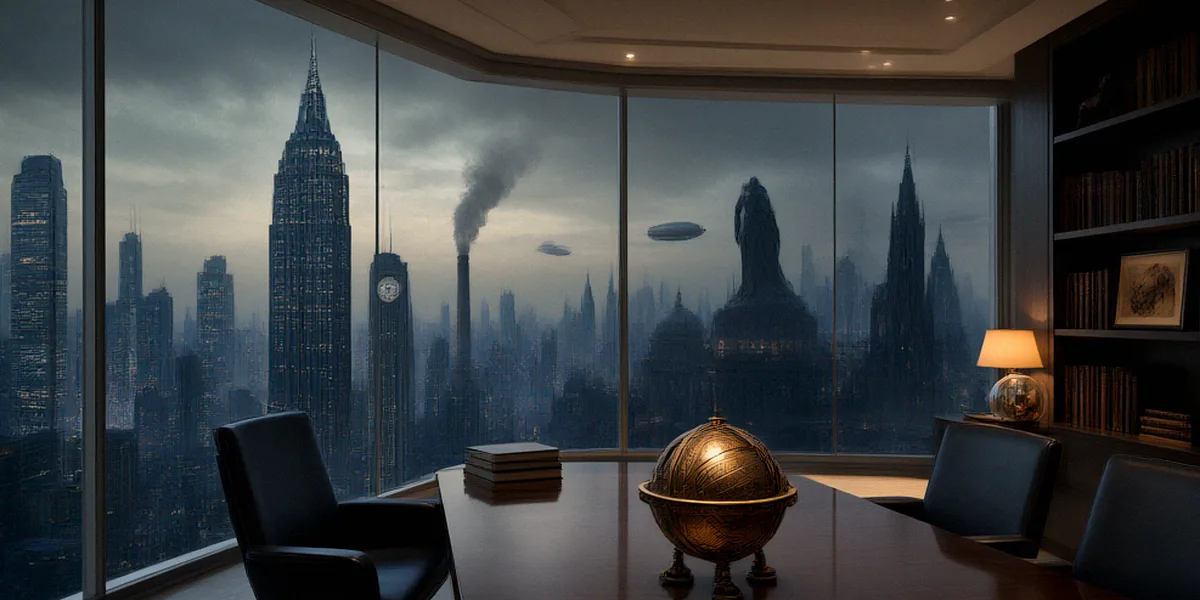
CCP Games announced the World of Darkness MMO in 2006, fresh off the success of EVE Online and hungry to prove it could build more than one living universe. The pitch was intoxicating: take the Vampire: The Masquerade licence, drop players into a modern-day city, and let them build a player-driven vampire society full of politics, betrayal, and blood. For a certain generation of tabletop players in the UK, it felt like someone had finally read their minds.
CCP’s Vision After EVE Online
EVE Online gave CCP something rare: a reputation for player-driven storytelling at a scale nobody else was attempting. The studio believed the same philosophy could work with vampires. Instead of spaceships and sovereignty, you’d have clans, territories, and Masquerade politics. The plan was for a sandbox where player alliances mattered more than scripted quests, echoing the emergent drama that made EVE famous.
The Allure of Vampire: The Masquerade
Vampire: The Masquerade was never just a combat system. It was a game of social manoeuvring, clan rivalries, and personal horror, and that made it an unusual but exciting fit for an online RPG. The Camarilla, the Sabbat, the Anarchs — all of it seemed tailor-made for guild-style conflict. Fans imagined Elysium gatherings in a shared online city, with Ventrue pulling strings and Nosferatu trading secrets in the shadows.
Development Hell and Rising Costs
What followed was a long, difficult decade. Development stretched on with little to show publicly, and by 2011 the cracks were impossible to ignore. CCP went through rounds of layoffs in 2011 and 2012, and several key staff attached to the World of Darkness project left the company. The studio’s attention was being pulled in multiple directions, and the vampire MMO kept slipping further down the priority list.
Internal Struggles at CCP
Reports from former employees painted a picture of a project that struggled to define itself. Was it a theme park MMO with story content, or a hardcore sandbox like EVE? Leadership changes and shifting design goals meant work was repeatedly redone. Meanwhile, the company’s finances were under pressure, and a project with no release date and no revenue was an easy target when cuts were needed.
The Impact of Dust 514
CCP’s decision to push hard on Dust 514, the console shooter tied into the EVE Online universe, diverted resources and studio focus at a critical time. Dust 514 launched in 2013 and never found the audience CCP hoped for, and its struggles compounded the pressure on the company. With EVE needing constant attention and Dust underperforming, the World of Darkness MMO looked increasingly like a luxury the studio could no longer afford.
The Cancellation and Aftermath
The MMO was officially cancelled in April 2014. CCP confirmed the news alongside a further round of layoffs, and the World of Darkness project — which had never launched, never entered open beta, and never shown a full public build — was gone. For a game announced eight years earlier, the ending felt abrupt and strangely quiet.
CCP’s Official Statement
In its statement, CCP framed the decision as a strategic refocus on EVE Online and its broader ecosystem. The company acknowledged the project’s ambition but made clear it could no longer justify the cost. There was no consolation release, no playable slice, and no roadmap for reviving the concept under CCP’s roof.
Fan Reactions and Unanswered Questions
Reaction from the UK community was a mix of frustration and resignation. The UK has a strong World of Darkness fan community, with events in London and Newcastle keeping the tabletop and LARP scenes alive, and many of those players had been waiting years for the digital version. Questions lingered: how far along was the game really? What happened to the assets and design documents? Most of those answers never came.
Why the World of Darkness MMO Failed
Looking back, the failure wasn’t down to one single mistake. It was a combination of technical ambition, market timing, and the sheer difficulty of turning a tabletop RPG into a living online world.
Technical and Design Hurdles
Building a shared urban environment with meaningful politics, persistent player housing, and social systems deep enough for Vampire’s themes was a huge engineering challenge in the 2000s and early 2010s. On top of that, the design team had to balance the personal horror of the tabletop game against the realities of an MMO where thousands of players share the same city. Those two goals pulled in opposite directions.
The Rise of Competing MMOs
The market also shifted beneath CCP’s feet. During the project’s long development, the MMO landscape changed dramatically:
- Free-to-play and live-service models reshaped how players expected to pay for online games.
- MOBAs and survival games pulled attention away from traditional subscription MMOs.
- Established giants like World of Warcraft and The Elder Scrolls Online dominated the space.
- Smaller narrative RPGs proved players would happily trade persistent worlds for tight storytelling.
By 2014, a subscription-based vampire MMO with no proven hook was a very hard sell.
The Legacy and Future of World of Darkness Online
The story didn’t end with cancellation. Paradox Interactive acquired the World of Darkness IP in 2015, and the franchise found new life across several projects. The dream of an online World of Darkness hasn’t died — it’s just changed shape.
Paradox Interactive’s Plans
Paradox brought the licence back into active development, licensing it out to multiple studios rather than hoarding it. The company has been cautious about promising another full MMO, but the IP is clearly being kept warm for interactive projects, including online and multiplayer-adjacent experiences.
Other Vampire: The Masquerade Games
Vampire: The Masquerade – Bloodlines 2 was announced in 2019, giving fans a long-awaited follow-up to the cult classic. Alongside it, we’ve seen narrative games, visual novels, and multiplayer experiments like Vampire: The Masquerade – Bloodhunt. None of them are the MMO fans once hoped for, but they show the setting still has commercial and creative pull.
For those of us who followed the CCP saga from announcement to cancellation, the World of Darkness MMO remains one of gaming’s great what-ifs. The franchise survived, the fans stayed, and the appetite for a shared vampire world is still there — just waiting for the right studio and the right moment.
FAQ
When was the World of Darkness MMO announced?
CCP Games announced the World of Darkness MMO in 2006, following the success of EVE Online and using the Vampire: The Masquerade licence.
When was the World of Darkness MMO cancelled?
The MMO was officially cancelled in April 2014, alongside a round of layoffs at CCP Games. It had never been released publicly.
Who owns the World of Darkness IP now?
Paradox Interactive acquired the World of Darkness IP in 2015 and has since licensed it for multiple games, including Vampire: The Masquerade – Bloodlines 2.
Will there ever be another World of Darkness MMO?
Nothing has been confirmed. Paradox has been cautious about committing to a full MMO, but the IP remains active across single-player and multiplayer projects, so a future online RPG isn’t off the table.
Is there still a World of Darkness community in the UK?
Absolutely. The UK has a strong World of Darkness fan community, with events in London and Newcastle supporting tabletop, LARP, and video game fans of the setting.